
Is BigClash Safe and Licensed in Australia? Licence and Regulatory Facts
 Available in US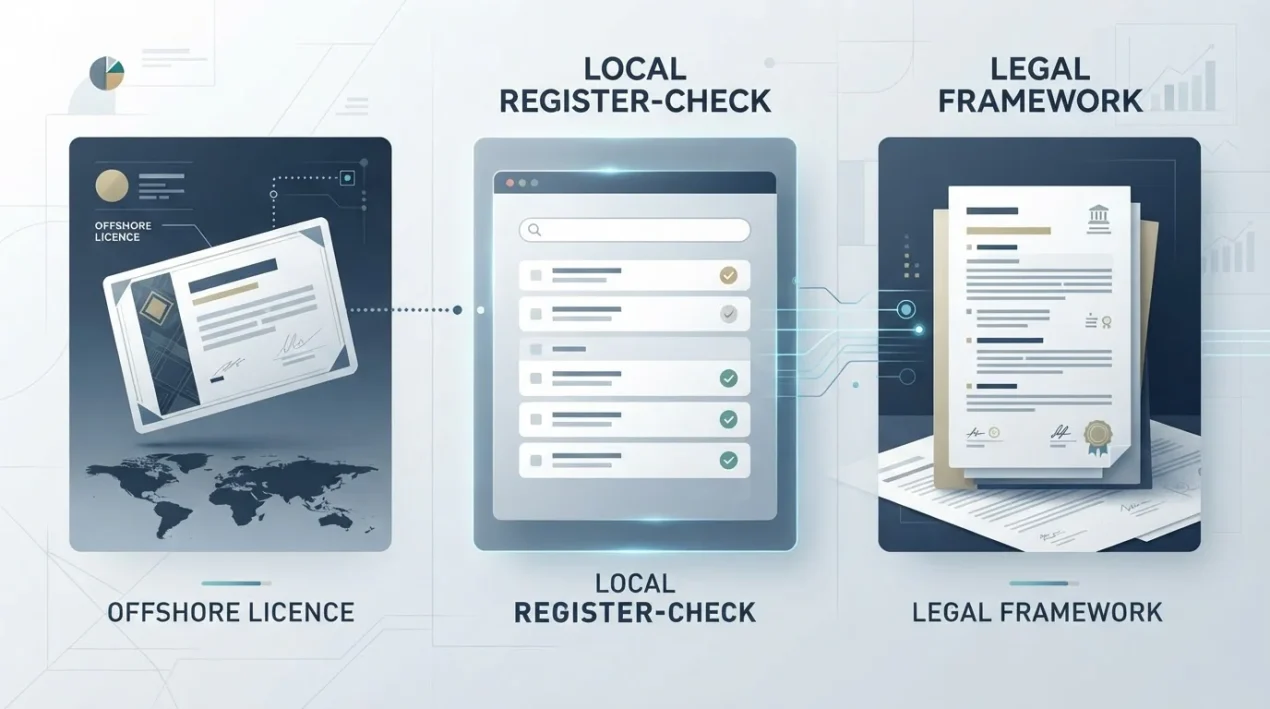
Content
BigClash should be assessed through three separate regulatory facts. First, BigClash is identified with operator Continent Gaming N.V. and Curaçao Gaming Authority licence OGL/2024/1332/0669. Second, no Australian local licence for BigClash was verified in the Australian Communications and Media Authority register of licensed interactive wagering providers. Third, Australian law prohibits providers from offering online casino services to people in Australia under the Interactive Gambling Act 2001. Those points are connected, but they do not mean the same thing.
A Curaçao licence is not an Australian licence. Absence from the ACMA wagering register is a local licensing fact, not proof of how every BigClash account behaves in practice. The Australian legal rule concerns what providers can offer to people in Australia. For that reason, technical access should not be turned into a claim of local Australian approval or authorisation.
The three regulatory layers at a glance
| Layer | Verified position | What it means |
|---|---|---|
| Operator licence | Continent Gaming N.V. is tied to Curaçao Gaming Authority licence OGL/2024/1332/0669 | This identifies an offshore licensing jurisdiction and operator relationship |
| Australian local licence | No BigClash match was verified in ACMA’s current licensed interactive wagering register | BigClash is not verified as an Australian-licensed wagering provider |
| Australian online casino law | Online casino services are prohibited interactive gambling services for Australian customers | Providers must not offer those services to people in Australia |
The distinctions matter because a site can display an offshore gambling licence without holding the licence or authorisation required for a regulated Australian wagering service. The reverse mistake is also common: seeing an offshore licence and assuming that local law has no relevance. Both approaches flatten different jurisdictions into one label and produce a misleading trust conclusion.
What the Curaçao licence tells you
The operator information used for BigClash identifies Continent Gaming N.V. and Curaçao Gaming Authority licence OGL/2024/1332/0669. The licence number is useful because it gives readers a concrete regulatory reference rather than a vague claim that the business is simply “licensed”. A regulator-issued licence can establish the jurisdiction and legal entity connected with a gambling operation.
That information does not convert the licence into Australian authorisation. Curaçao and Australia are separate regulatory systems. An offshore licence can matter for operator identification, regulatory oversight in its own jurisdiction and the existence of a licensing framework, but it does not place BigClash on the Australian register of licensed interactive wagering providers.
It also does not guarantee a particular outcome for a withdrawal, bonus dispute, account review or support interaction. A licence is one input in a safety assessment. Transaction rules, account controls, complaint evidence and the rules of the reader’s own jurisdiction still need to be considered separately.
What ACMA’s register does – and does not – show
The ACMA register of licensed interactive gambling providers is the relevant public reference for checking whether an online wagering operator is licensed to operate within Australia’s regulated interactive wagering framework. ACMA states that an online wagering service must be on this register to operate legally in Australia as a licensed interactive wagering provider.
BigClash was not found in the current register. The precise conclusion is that no Australian local licence was verified for BigClash. That does not establish Australian regulatory coverage or the consumer-protection arrangements that attach to an Australian-licensed wagering provider.
The register is specifically important for wagering. Australian law treats online casino services as a separate prohibited category. A reader therefore should not interpret the existence of the register as evidence that an online casino can become locally authorised merely by appearing alongside bookmakers. The product category and the licensing framework must both be identified correctly.
Australian law on online casino services
The federal starting point is the Interactive Gambling Act 2001. ACMA’s current explanation states that the Act makes it illegal for gambling providers to offer several online services to people in Australia, including online casinos. The same framework also covers other restricted services such as in-play sports betting and sports betting services that do not hold an Australian licence.
This is a rule directed at the provision of gambling services. It is therefore more accurate to say that Australian law prohibits providers from offering online casino services to people in Australia than to use a loose brand slogan such as “BigClash is legal” or “BigClash is illegal” without explaining the service category and regulatory basis.
The distinction is especially important because BigClash offers both casino and sportsbook features. The BigClash sportsbook explains the separate wagering framework. A sportsbook feature cannot be treated as Australian-licensed merely because it exists, and an offshore casino licence cannot substitute for inclusion on Australia’s licensed wagering register.
Advertising restrictions add another layer
Australian rules also restrict advertising for prohibited interactive gambling services. ACMA states that banned services, including online casinos, must not be advertised in Australia. For Australian readers, offshore access does not amount to local regulatory endorsement. BigClash is not verified as Australian-regulated or ACMA-approved on the basis of the current register evidence.
The regulatory position requires separating the brand’s offshore operator licence from the Australian framework without implying local approval. The same discipline is useful when reading third-party reviews, comparison sites or social posts that use a simple “licensed” badge without naming the jurisdiction behind it.
BetStop: useful, but its scope is specific
BetStop is Australia’s National Self-Exclusion Register for Australian-licensed online and phone wagering providers. It lets a person exclude themselves from those licensed wagering services through one national process. ACMA describes BetStop as part of the Australian interactive wagering protection framework.
That scope should not be stretched to offshore online casino services. A reader should not assume that because BetStop exists in Australia, every gambling website accessible from Australia is automatically covered by it. The relevant question is whether the service falls within the Australian-licensed online or phone wagering framework.
BigClash also has product-level responsible gambling information. Those tools should be evaluated as features of the product itself, not as evidence of Australian regulatory protection or BetStop participation. Local protection and product controls are different layers, just as local licensing and offshore licensing are different layers.
The 2026 gambling reforms and the dates that matter
Australia enacted the Interactive Gambling Amendment (Gambling Reform) Act 2026, Act No. 72 of 2026, with Royal Assent on 26 August 2026. The commencement table is important because enactment does not mean every substantive change began on the same day.
Sections 1 to 4 commenced on 26 August 2026. Schedule 5 commenced on 27 August 2026. All other schedules are set to commence on 1 January 2027. ACMA’s current overview likewise states that most reforms commence on 1 January 2027. As of 4 September 2026, readers therefore need to distinguish between reforms that have been enacted and measures whose substantive operation begins in 2027.
The reform package covers areas including wagering advertising, disruption of illegal gambling services, BetStop, online lottery products, inducements and a wagering advertising opt-out register. For a BigClash trust assessment, the key point is not to import future commencement into the present. Current legal status should be described under the law in force today, while the 1 January 2027 start date is clearly labelled as a future commencement date.
Does technical access prove legality or licensing?
No. Being able to open a website, view a registration screen or see payment methods is a technical-access fact. It is not evidence that the service holds an Australian licence. The reverse is also true: a browser-side block, anti-bot page or regional message does not prove a general prohibition on every Australian account.
Australian local licensing should be checked against regulator records, while the legal framework comes from legislation. If you are evaluating whether to create an account, the BigClash registration explains account mechanics, while the regulatory questions remain separate from account mechanics.
How to read “safe” without turning it into a guarantee
“Safe” is not a single verifiable field. A sensible assessment breaks it into narrower questions. Is there an identifiable operator and licence? Is there a verified local Australian licence? What does Australian law say about the service category? Are payment rules clear? What do complaint platforms show, and which parts of those complaints are evidence rather than allegation?
- Operator identity: the operator identity is Continent Gaming N.V.
- Offshore licence: the licence reference is Curaçao Gaming Authority OGL/2024/1332/0669.
- Australian local licence: no BigClash match was verified in ACMA’s current register.
- Australian online casino rule: providers are prohibited from offering online casino services to people in Australia.
- Payments: evaluate the specific deposit and withdrawal rules rather than inferring safety from licensing alone.
- Complaints: treat user narratives as sentiment signals unless their factual content is independently verified.
For transaction mechanics, use the BigClash payments. For noisy user sentiment, use the separate BigClash reviews and complaints, which explains how to separate platform metadata, resolved complaint records and unverified allegations.
Practical checklist for Australian readers
- Check the named operator and offshore licence rather than relying on a generic “licensed” badge.
- Check ACMA’s current register if a service is presented as an Australian-licensed wagering provider.
- Identify whether the feature is an online casino service, wagering service or another gambling category.
- Do not treat an offshore licence as equivalent to an Australian state or territory wagering licence.
- Read transaction terms independently of the licensing question.
- Check the date on legal and regulatory sources, especially while the 2026 reforms move toward their 1 January 2027 commencement.
- Use complaint platforms as evidence of sentiment and dispute themes, not automatic proof of every allegation.
This process produces a more useful answer than a binary “safe” badge because it tells you which parts are verified and which protections actually apply.
Product safeguards are not Australian regulatory coverage
Responsible gambling controls can still be relevant when judging how an account can be managed, but their existence does not establish Australian licensing. A self-exclusion control, account restriction or support process is a product feature. BetStop coverage, Australian licensing and statutory protections depend on the Australian regulatory framework and the service category, not on whether an offshore site provides a similar-looking tool.
Safety assessments can become misleading when every positive signal is bundled into one “safe” label. A better method keeps the signals separate. Product controls can reduce some account-management risks. A named offshore licence can identify an operator and jurisdiction. Australian register status tells you whether local wagering licensing was verified. Federal law determines which services providers can offer to people in Australia. None of those facts should be silently substituted for another.
Bottom line
BigClash’s regulatory picture for Australian readers has three distinct layers. BigClash is identified with Continent Gaming N.V. under Curaçao Gaming Authority licence OGL/2024/1332/0669. No Australian local BigClash licence was verified in ACMA’s current wagering register. Separately, the Interactive Gambling Act framework prohibits providers from offering online casino services to people in Australia.
Those facts do not support a claim of Australian local approval or a safety guarantee. The useful conclusion is narrower: the offshore licence, local licensing status and Australian service rules must be evaluated independently. That framework also makes it easier to interpret account access, payment behaviour and user reviews without confusing them with regulatory approval. Return to the BigClash Australia review for the wider product picture.
This material was created by the BigClash Australia Guide team.
Related posts
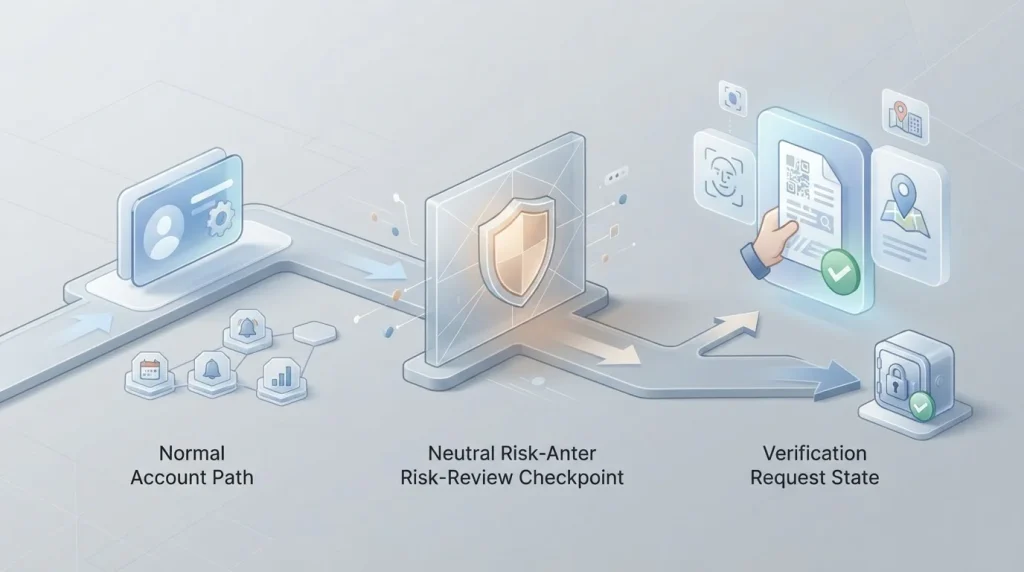
BigClash KYC and Verification: When Checks Are Triggered
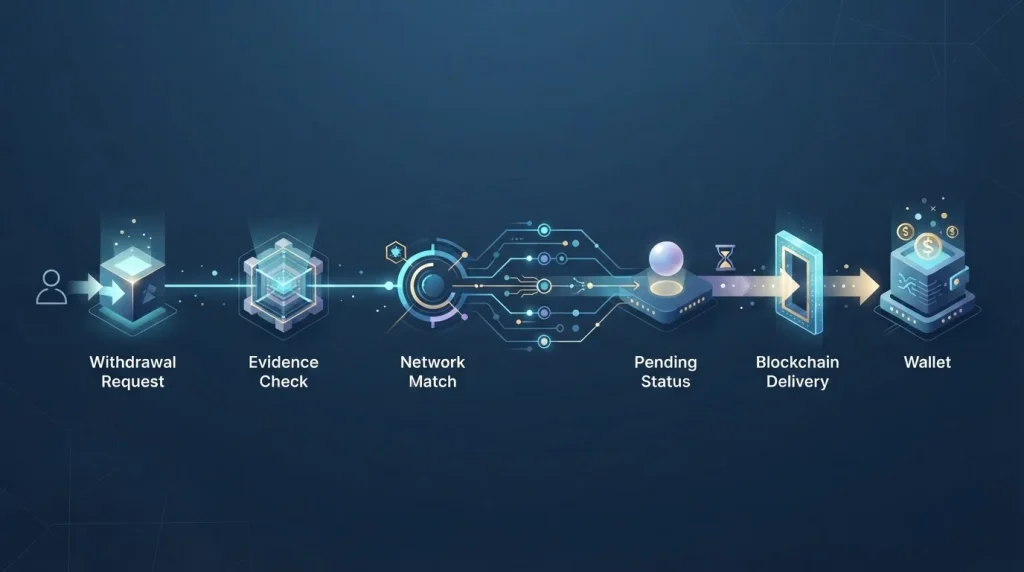
BigClash Withdrawals Australia: Minimums, Processing and What Is Verified