BigClash Registration and Account Setup in Australia
 Available in US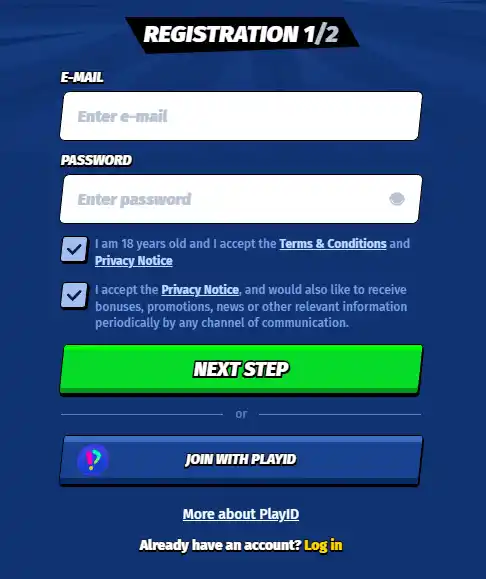
Content
BigClash registration can be started through four account routes: email, Google, Telegram or WalletConnect. These routes provide different ways to establish access to the same account environment, so the practical choice is about which credential or connection method you prefer to manage. For Australian users, the stated minimum age is 21+. Where the live registration flow asks for location or country information, provide accurate details rather than trying to work around eligibility checks.
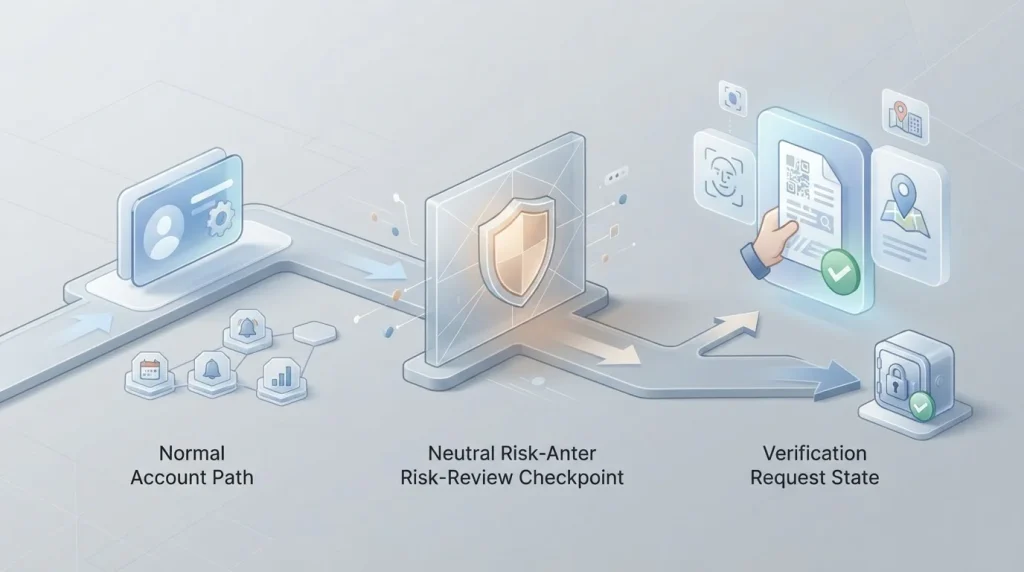
Registration and KYC are separate stages. Creating an account does not mean that a fixed identity-document check is automatically part of the sign-up flow. Verification is treated as a conditional process tied to suspicious activity, and the exact evidence requested in such a case is not fixed for every account. If you want the verification boundary rather than the sign-up mechanics, use the dedicated BigClash KYC.
BigClash registration options at a glance
| Route | What it changes | Best practical use |
|---|---|---|
| Uses a conventional email-based account route | Useful if you want the casino login kept separate from social or wallet services | |
| Connects account creation to a Google identity route | Convenient when you already manage access through Google | |
| Telegram | Uses Telegram as an account access route | Useful for users who prefer a messaging-linked entry point |
| WalletConnect | Uses a supported wallet connection as the account route | Relevant to users who already manage compatible wallet access |
The four routes should not be read as four different products. They are alternative ways to begin account access. The choice does not change the need to follow the same age, country and account rules once the account exists.
Which registration route makes the most sense?
Email is the most familiar option because it keeps sign-up in a conventional credential model. It is straightforward to understand, and it can be easier to separate from other services if you prefer a distinct account identity for gambling-related activity. The trade-off is that you are responsible for keeping the associated email account secure and maintaining a strong, unique password wherever a password is used.
Google is more convenient for people who already rely on a Google identity for account access. The practical benefit is fewer separate credentials to remember. The security boundary, however, becomes broader: access to the connected Google account matters because it may sit upstream of access to other services. A strong Google password and secure recovery settings therefore become part of good account hygiene.
Telegram is useful when you already use Telegram and prefer a messaging-linked route. The same principle applies: protect the Telegram account itself, review active sessions and avoid approving unexpected login requests. Using a familiar service can reduce friction, but familiarity should not replace basic checks on the site address and the device you are using.
WalletConnect is the most specialised route of the four. It is relevant if you already understand wallet connections and want to use a compatible wallet-based entry point. A wallet connection should be treated as a security-sensitive action. Check the domain before approving a connection, read the request presented by the wallet and avoid connecting from links received through unsolicited messages.
Age and location accuracy
The BigClash minimum age is 21+. Do not create an account if you are under that threshold. Age is not a cosmetic formality: it is an eligibility boundary, and entering inaccurate information can create account problems later.
If the current registration interface asks you to state a country or location, answer accurately. Registration fields can change with the live interface. If country or location information is requested, provide accurate details rather than using false information to pass a sign-up step. Information entered during registration should remain consistent with your real circumstances.
These declarations are separate from the wider legal position of online gambling in Australia. Account access, local licensing and Australian gambling law answer different questions. Registration mechanics therefore should not be treated as proof that a service is locally licensed or legally authorised.
Registration is not the same as KYC
The most important boundary is the difference between opening an account and later identity verification. BigClash registration is the stage where an account is created through one of the supported routes and the required declarations are made. KYC is a separate compliance process that becomes relevant conditionally when suspicious activity is detected.
That distinction prevents two common mistakes. The first is assuming that every new account must complete the same verification checklist immediately. The second is assuming that a quick sign-up means verification can never happen later. Neither conclusion follows from the conditional account model. Registration can be simple while later verification remains possible when the trigger is reached.
No fixed BigClash KYC document list or universal processing-time promise is established for every verification case. If a verification request appears on an account, follow the current instructions shown in the account or support flow rather than relying on a generic checklist copied from another casino.
A practical sign-up sequence
- Start from the official BigClash site rather than a copied registration link from an unsolicited message.
- Choose the account route you genuinely intend to maintain: email, Google, Telegram or WalletConnect.
- Use accurate age and country information and do not create an account if you are under 21.
- Review the account information before completing sign-up, especially if a connected identity or wallet is involved.
- After the account is created, secure the credential or connected service that controls access.
- Treat any later verification request as a separate account event and follow the instructions presented at that time.
The practical sequence is simple: choose one of the four account routes, provide accurate information and secure the credential or connection method you use.
Account security after registration
Good account security does not require a claim that BigClash provides a specific two-factor authentication feature. You can improve your own security regardless of the site’s feature set. Use a unique credential where a password is involved, protect the email or connected identity behind the account and avoid logging in on shared devices when possible.
- Check the website address before entering credentials or approving a wallet connection.
- Do not reuse a password that protects important email, banking or work accounts.
- Keep the device operating system and browser updated.
- Review connected-service sessions when using Google or Telegram access.
- Lock your phone or computer so another person cannot open an active casino session.
- Do not share login codes, recovery links or wallet approval requests with another person.
These are general security practices, not claims about brand-specific protective tools. They remain useful whether you register through email, a connected identity or WalletConnect.
How registration connects to deposits and bonuses
An account is the starting point for other BigClash features, but registration should not be confused with those later decisions. Before funding an account, read the dedicated BigClash payments guide so you understand the crypto payment routes and network requirements.
Likewise, creating an account does not by itself answer whether a promotion is suitable. Bonus value depends on the offer structure and the terms attached to it. The BigClash bonuses information can be evaluated separately from the account-creation process.
Keeping these topics separate is useful because it reduces rushed decisions. Create the account only if the access method, age requirement and country declaration make sense for you. Evaluate funding and promotional terms afterward instead of treating sign-up as a commitment to deposit immediately.
Registering from a phone
The account routes are also relevant to mobile users. BigClash is designed to be accessed through a mobile browser and shortcut-style flow rather than requiring an unverified native store application. If you plan to register from a phone, start from the official website, complete the account process there and protect the connected email, Google, Telegram or wallet account on the same device.
The separate BigClash mobile guide explains the mobile access model in more detail. Registration itself does not require a different account simply because you move between desktop and mobile. The important question is whether you can securely control the login or connected identity on every device you use.
What not to assume during sign-up
- Do I need a separate account for each registration route?
- No such requirement is established. Treat the options as alternative entry routes, not an invitation to create duplicate accounts.
- Does sign-up prove the service is locally licensed in Australia?
- No. Registration access and local licensing are separate questions.
- Does a completed registration mean KYC can never be requested?
- No. Verification is a separate conditional process.
- Is there a verified universal document checklist?
- No fixed checklist applies to every case; follow the account-specific instructions if verification is requested.
- Should I copy registration details from a third-party walkthrough?
- No. Use the current BigClash interface and provide information that is accurate for you.
Bottom line
BigClash registration gives Australian users four account routes: email, Google, Telegram and WalletConnect. The stated minimum age is 21+, and users should declare their real country rather than treating location as a setting to manipulate. Choose the route you can secure and maintain most reliably.
Most importantly, keep account creation separate from later verification. KYC is not a standard sign-up step; it is a conditional process tied to suspicious activity, with no universal document list or processing-time promise established for every verification case. That separation makes it easier to understand what you are agreeing to at registration and what could happen later if an account review is triggered. For the wider product picture, return to the BigClash Australia review.
This material was created by the BigClash Australia Guide team.
Related posts
BigClash KYC and Verification: When Checks Are Triggered
BigClash Withdrawals Australia: Minimums, Processing and What Is Verified