
BigClash Withdrawals Australia: Minimums, Processing and What Is Verified
 Available in US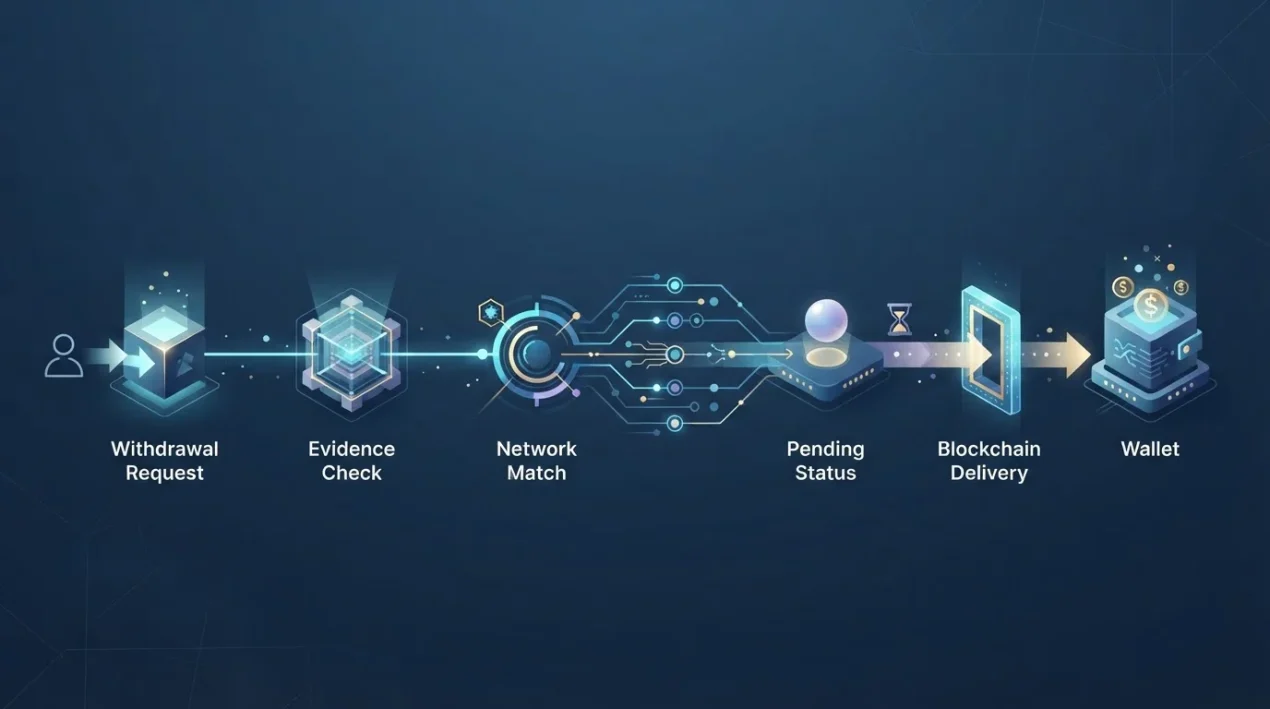
Content
Two concrete withdrawal points are available: cashout access is described as available 24 hours a day, seven days a week, and one route-specific minimum example is 3 USDT for USDT on BEP-20. Neither point proves an instant payout. Round-the-clock access describes when a withdrawal can be requested, while final delivery still depends on account checks, the selected network and the destination wallet.
That distinction matters because other pages on the web publish daily limits, monthly limits, fees and processing windows that do not all agree. Conflicting third-party figures should not be treated as BigClash terms. Confirmed availability and route-specific minimums should be separated from reported limits and processing estimates.
BigClash withdrawal facts at a glance
| Question | Supported answer | What not to infer |
|---|---|---|
| When can a withdrawal be requested? | Withdrawal access is described as available 24/7 | This does not guarantee immediate settlement |
| What is one route-specific minimum? | 3 USDT for USDT on BEP-20 | This is not a universal minimum for every asset or network |
| Is there one verified processing time? | No universal completion time is established | Do not convert third-party estimates into a guarantee |
| Are daily or monthly limits fixed for BigClash withdrawals? | No single unverified limit is established | Review-site figures can differ by VIP level, currency, date or source |
| Are withdrawal fees verified? | No universal fee figure is established | Casino fees and blockchain network fees are different cost layers |
24/7 withdrawal access is not the same as a payout SLA
The phrase 24/7 is easy to misread. In this context it describes availability of the withdrawal function rather than a fixed service-level promise for completion. A request submitted at night or on a weekend can still pass through several stages before funds arrive in an external wallet.
Those stages may include the account accepting the request, any applicable account or wallet review, the platform preparing a blockchain transaction, network confirmation and the destination service crediting the transfer. A delay at any one stage can change the total elapsed time. For that reason, 24/7 withdrawal access should not be described as “instant”, “guaranteed” or “same-hour”.
The practical way to interpret the 24/7 statement is narrow: withdrawal access is not described as a bank-hours-only function. It does not eliminate verification checks, blockchain congestion or recipient-wallet confirmation policies.
The 3 USDT BEP-20 example is route-specific
One route-specific minimum example is 3 USDT for a USDT withdrawal over BEP-20. The network qualifier is essential. USDT can exist on several blockchain networks, and a minimum attached to one route does not establish the minimum for ERC-20, TRC-20, Polygon, TON or any other route.
This also means the number should not be copied to Bitcoin, Ethereum, Solana, Litecoin or another asset. A withdrawal threshold belongs to the exact asset-network pair shown in the current cashier. The dedicated BigClash payments guide explains why asset and network should be treated as two separate choices rather than one label.
For an Australian reader, converting 3 USDT into a fixed AUD figure would create false precision because exchange rates move. The route-specific crypto amount is the relevant reference point.
Verified versus reported withdrawal information
Withdrawal information from review sites can be unusually noisy because published fields can describe different dates, currencies or account tiers. A table can make a number look official when it is only a third-party observation.
| Information type | How to treat it | Example |
|---|---|---|
| Operator statement or directly verified rule | Can be stated directly within its exact scope | 24/7 access; 3 USDT on BEP-20 |
| Current account-specific cashier field | Use for the transaction in front of you | Minimum or available network shown after login |
| Review-site data field | Useful for comparison, not automatically an operator rule | Daily limit or stated processing window |
| User complaint or testimonial | Treat as sentiment or an individual experience | A claim that a withdrawal was delayed |
| Blockchain status | Independent technical evidence after broadcast | Transaction hash and confirmation count |
This hierarchy prevents two common errors: presenting a review-site limit as if it were a contractual rule, and presenting one user’s complaint as proof that every withdrawal follows the same pattern.
Why third-party limits are not promoted to fixed BigClash rules
Some third-party reviews publish daily or monthly withdrawal limits, and other sources describe different amounts or processing windows. Those figures are not consistent enough to justify one universal BigClash withdrawal limit. A limit can also depend on account status, VIP level, currency, payment route or later terms changes.
That does not make every third-party figure useless. It means the figure should stay in its proper evidence category. A reader can use review data as a question to verify in the cashier or terms, but should not assume it overrides the current account interface. Player feedback is covered in BigClash reviews and complaints and should not be mixed into payment rules.
If a large cashout is important to your decision, inspect the current withdrawal screen before depositing with the expectation of a particular daily or monthly ceiling. The useful answer is the live account rule, not the most dramatic number found in a search result.
A crypto withdrawal has more than one checkpoint
- Choose the correct asset. Confirm whether the balance will be withdrawn as USDT, BTC, ETH or another available asset.
- Choose the exact network. A token can exist on multiple chains. The sending and receiving routes must match.
- Read the live minimum. Use the amount shown for the selected route rather than assuming the 3 USDT BEP-20 example applies everywhere.
- Check the destination address. Compare the first and last characters after pasting it into the cashier.
- Review any account prompts. If the account requests verification or another check, complete that process before assuming the blockchain is responsible for a delay.
- Keep the transaction record. Once a transaction hash exists, it provides a technical reference for checking blockchain progress.
These steps describe the withdrawal decision process at a general level. The exact logged-in cashier can change, so the current screen should control any transaction-specific detail.
Network matching is the most important technical check
Crypto withdrawals are less forgiving than many conventional payment methods because blockchain transfers are generally difficult to reverse. Sending a token to an incompatible network or address can create a loss that support may not be able to repair. That is why the network label matters as much as the token label.
For USDT, do not stop at seeing the same asset name in the casino and destination wallet. Verify the chain too. If the withdrawal screen says BEP-20, the receiving wallet must support USDT on BEP-20. The same logic applies to ERC-20, TRC-20 and other multi-network assets.
A small route-specific minimum can make a test withdrawal practical, but a test is not a guarantee that every later amount will have identical handling. Account status, network conditions and recipient-wallet policies can still differ.
Processing time should be judged stage by stage
When a withdrawal seems slow, ask where it is slow. If the request remains pending inside the account, the issue is different from a transaction that has already been broadcast to a blockchain. If a transaction hash exists but the receiving wallet has not credited the funds, blockchain confirmation or the destination service may be the relevant layer.
This stage-based approach is more useful than a generic promise such as “withdrawals take X hours”. Third-party reviews publish method-specific processing windows that do not all agree. Because those estimates are not equivalent to the 24/7 availability statement and can change, they should not be turned into one guaranteed timer.
If a withdrawal remains unresolved, gather the amount, asset, network, request status and transaction hash if available before contacting support. BigClash offers 24/7 live-chat support, giving users a direct channel for account-specific questions.
When KYC becomes relevant
Identity verification can affect withdrawals, but no fixed document list, review time or universal KYC trigger is established for withdrawals. Those details are higher-risk because they can change and because individual accounts can be asked for different checks.
If you are preparing an account before a first cashout, read the BigClash registration information first and follow the KYC instructions if the account presents a verification request. Treat payment mechanics and identity verification as separate questions: a route-specific withdrawal rule should not be mistaken for a KYC requirement.
What to do if a withdrawal is delayed
- Check whether the request is still pending, approved or completed in the account.
- Confirm the asset and network used for the withdrawal.
- If a transaction hash exists, inspect its blockchain confirmation status.
- Check whether the destination wallet requires additional confirmations before crediting funds.
- Keep saved transaction images and transaction references rather than relying on memory.
- Contact support with the exact request details if the status is unclear.
A delayed withdrawal is not automatically evidence of fraud, and a single complaint does not prove a general operator rule. Likewise, a positive anecdote about a fast payout does not prove that every future transaction will be fast. Evidence quality matters in both directions.
How licensing relates to withdrawals
Payment performance and licensing are different questions. A withdrawal can be technically completed regardless of whether an operator holds a local Australian licence, and a local licence status cannot be inferred from a successful cashout. Regulatory status is explained in BigClash licence and safety and should not be inferred from payout performance.
This separation is useful when comparing casinos. Do not let a fast anecdotal payout substitute for licence verification, and do not let a licence discussion invent withdrawal limits that the withdrawal information does not support.
Bottom line
Two useful BigClash withdrawal facts are narrow and specific: withdrawal access is described as available 24/7, and 3 USDT is a route-specific minimum example for USDT on BEP-20. The first is an availability statement, not an instant-processing promise. The second is route-specific, not a platform-wide minimum.
Daily limits, monthly limits, fees and exact completion times should not be copied from conflicting review sites and presented as universal rules. Before a real cashout, confirm the current asset, network, minimum and account status in the live cashier. Then judge any delay by stage – account review, blockchain broadcast or destination-wallet credit – rather than by a single generic timer. For the wider platform context, see the BigClash Australia review.
This material was created by the BigClash Australia Guide team.
Related posts
BigClash KYC and Verification: When Checks Are Triggered
BigClash Reviews and Complaints: How to Read Player Feedback