
BigClash KYC and Verification: When Checks Are Triggered
 Available in US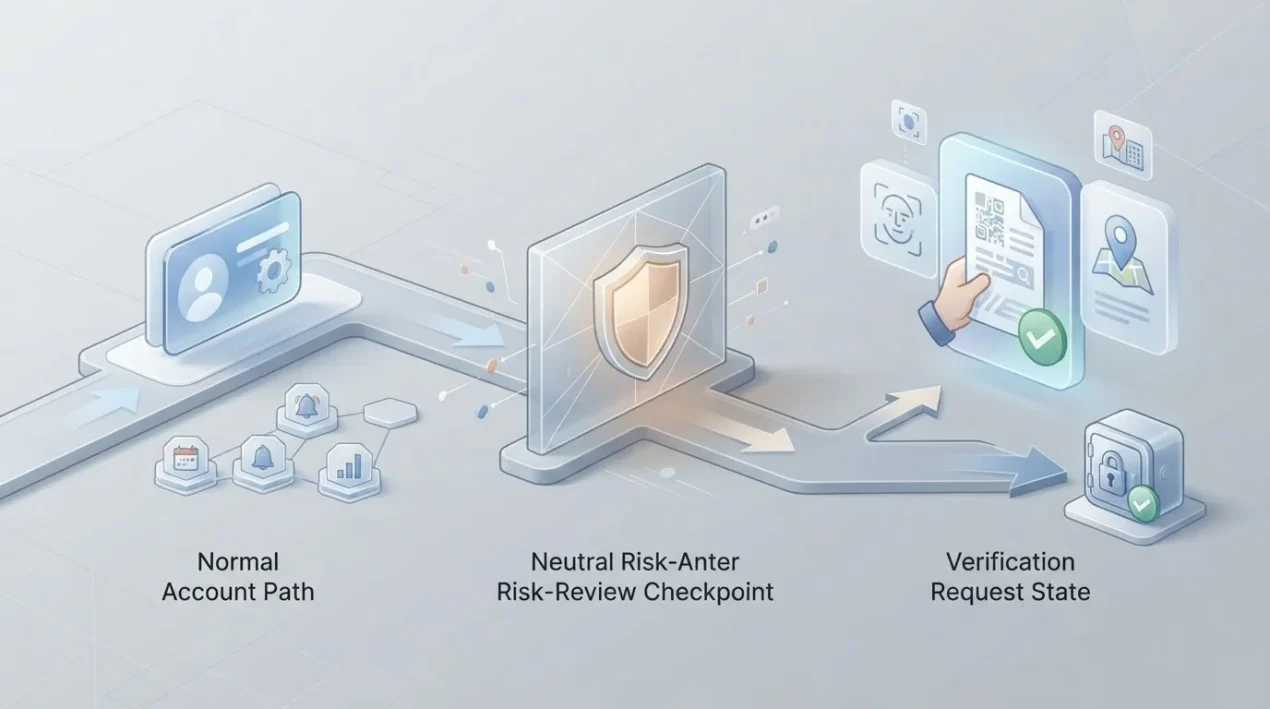
Content
BigClash KYC is a conditional verification process rather than a default sign-up step. KYC is required when suspicious activity is detected. That means account creation and routine use are treated separately from a later verification request.
There is no verified fixed document list or universal processing time that applies to every case. If BigClash requests verification on an account, the exact evidence and timing must be taken from the current instructions presented for that case. The trigger is conditional, and the exact evidence and timing depend on the instructions presented for the account.
BigClash KYC at a glance
| Question | What is established | What is not established |
|---|---|---|
| Is KYC a default registration step? | No. It is treated as conditional | No claim is made that verification can never happen later |
| What triggers KYC? | Suspicious activity | No narrower trigger checklist is published |
| Which documents are requested? | No fixed public list is verified for all cases | No specific document set applies universally |
| How long does verification take? | No universal processing time is verified for all cases | No same-day or fixed-hour promise is made |
| Does every withdrawal trigger KYC? | No such blanket rule is established | Withdrawal and verification should not be automatically equated |
What a conditional KYC model means
A conditional model separates the normal account path from a later compliance event. A user can create an account through the registration process without treating a full identity-verification checklist as a standard part of every sign-up. If suspicious activity is detected, an additional verification step can then be triggered.
This is a process distinction, not a no-KYC promise. Conditional verification still matters because a later request can affect what the account holder needs to do before an account issue is resolved. The useful way to think about it is: registration establishes the account, routine use continues under the normal account state, and a specific trigger can move the account into a verification state.
The dedicated BigClash registration page covers sign-up methods, while KYC begins only when a later verification trigger occurs.
Why there is no fixed document list
KYC pages often become unreliable when they copy a generic checklist from another operator and present it as brand-specific fact. No fixed brand-specific document list is established for every verification case.
A case-specific request can depend on the reason the account was flagged and the information already associated with it. Because no universal BigClash document list is established, naming specific documents as mandatory would create false precision. The more useful instruction is to read the exact request shown for your account and supply only the evidence that BigClash asks for through the current account or support flow.
Extra items mentioned in third-party casino guides should not be treated as BigClash requirements. A generic industry practice is not enough to establish a BigClash requirement. A document type mentioned in a third-party casino guide should not be treated as mandatory unless BigClash requests it for the account.
No fixed verification time is promised
There is no verified universal KYC processing time for every case. Verification duration can depend on the case, the information requested and whether follow-up is needed. A fixed number of minutes, hours or days would turn an estimate into a promise.
If an account receives a verification request, use the timing guidance shown in the current account or support interaction. If no time is stated there, treat the case as open rather than assuming a deadline based on another user’s experience. This is especially important when access to funds or account features is involved, because an unsupported timing expectation can lead to unnecessary escalation.
A useful distinction is between the time needed to submit information and the time needed for a review to be completed. Even when the user can respond immediately, that does not establish how long the review itself will take. Submission time and review time should be treated separately.
KYC and withdrawals are related topics, not the same rule
Verification often becomes relevant when users are thinking about money leaving an account, which is why KYC and withdrawal searches overlap. A withdrawal does not automatically trigger KYC; the established trigger is suspicious activity.
If you are trying to understand payout mechanics, minimums or availability rather than identity verification, use the dedicated BigClash withdrawals. It keeps payment facts separate from KYC so that a route-specific withdrawal rule is not accidentally presented as an identity requirement.
The same separation applies to deposits. A payment method can have its own network or account considerations without proving that a KYC review is required. The broader BigClash payments page covers the payment side of the account without turning routine transactions into verification triggers.
What to do if BigClash requests verification
- Read the request inside the current account or official support flow rather than relying on a third-party checklist.
- Identify exactly what information BigClash is asking for and whether the request includes a deadline or response channel.
- Provide only accurate information that belongs to you and matches the account details.
- Use the requested upload or communication route rather than sending sensitive information to an unsolicited contact.
- Keep a record of what you submitted and when, without exposing sensitive material in public forums.
- If the instruction is unclear, ask official support to clarify the request before sending unrelated personal information.
General account-safety steps do not establish a universal BigClash document checklist, review sequence or processing deadline.
How to recognise an unsafe verification request
A genuine need for verification does not remove the need to check where the request came from. Treat unexpected links, direct messages and requests to send sensitive account material through informal channels with caution. Start from the official BigClash site and navigate to the account or support area yourself instead of following a link whose origin you cannot verify.
Do not publish verification material on social media, forums or review sites in an attempt to prove that a request exists. Public posting can create a separate privacy problem. If you need help understanding a request, describe the issue without sharing sensitive account data and use the operator’s official support route for account-specific instructions.
These precautions do not depend on which evidence is ultimately requested. They are useful because KYC involves identity-related information, and the safest process is to keep that information within the intended account or support channel.
Limits of the KYC information
- KYC is not established as a universal registration step for every BigClash user.
- An account can still be selected for verification when the trigger is reached.
- No fixed evidence list applies to every case.
- No universal verification time applies to every case.
- Deposits and withdrawals do not automatically establish the stated KYC trigger.
- A third-party casino checklist should not be treated as a BigClash requirement.
There is no verified fixed document list or universal processing-time promise for BigClash KYC. The exact evidence and timing depend on the case and should be confirmed through the current official account or support flow when a request appears. Generic KYC examples should not be treated as BigClash-specific requirements.
KYC, account safety and regulatory context
Identity verification, account security and licensing are related but separate subjects. KYC concerns a user’s account and a conditional verification process. Account security concerns how credentials and sensitive information are protected. Licensing concerns the regulatory status under which a gambling service operates.
Keeping those categories separate avoids a common reasoning error: a verification request does not by itself prove a particular local licence, just as a licence statement does not establish the exact KYC evidence required for an individual account. For the wider Australian regulatory and operator-status discussion, use the BigClash licence and safety page rather than inferring legal conclusions from a verification event.
Frequently asked questions
- Does BigClash require KYC immediately when I register?
- No. BigClash KYC is conditional, with suspicious activity acting as the trigger.
- What exact evidence will BigClash ask me to provide?
- No fixed list is verified for public use. Follow the exact request shown for your case.
- How long will BigClash KYC take?
- No universal processing time is established; follow account-specific timing guidance.
- Does every withdrawal cause a KYC check?
- No such blanket rule is established. Do not treat withdrawal and verification as identical processes.
- Can I ignore a verification request because KYC is conditional?
- No. Conditional means the check is trigger-based, not optional once a valid request has been made on the account.
Bottom line
BigClash KYC is best understood as a later conditional account process, not a default registration checklist. The established trigger is suspicious activity. That allows registration mechanics and verification mechanics to be explained separately without assuming that every new account follows the same identity-review path.
No fixed document list or universal processing-time promise is established for every case. If verification is requested, follow the current account-specific instructions, use the official support route when clarification is needed and do not import a checklist or timeline from another casino. For the broader product context, return to the BigClash Australia review.
This material was created by the BigClash Australia Guide team.
Related posts
BigClash Withdrawals Australia: Minimums, Processing and What Is Verified

BigClash Reviews and Complaints: How to Read Player Feedback