BigClash Payments Australia: Crypto, Networks and Deposits
 Available in US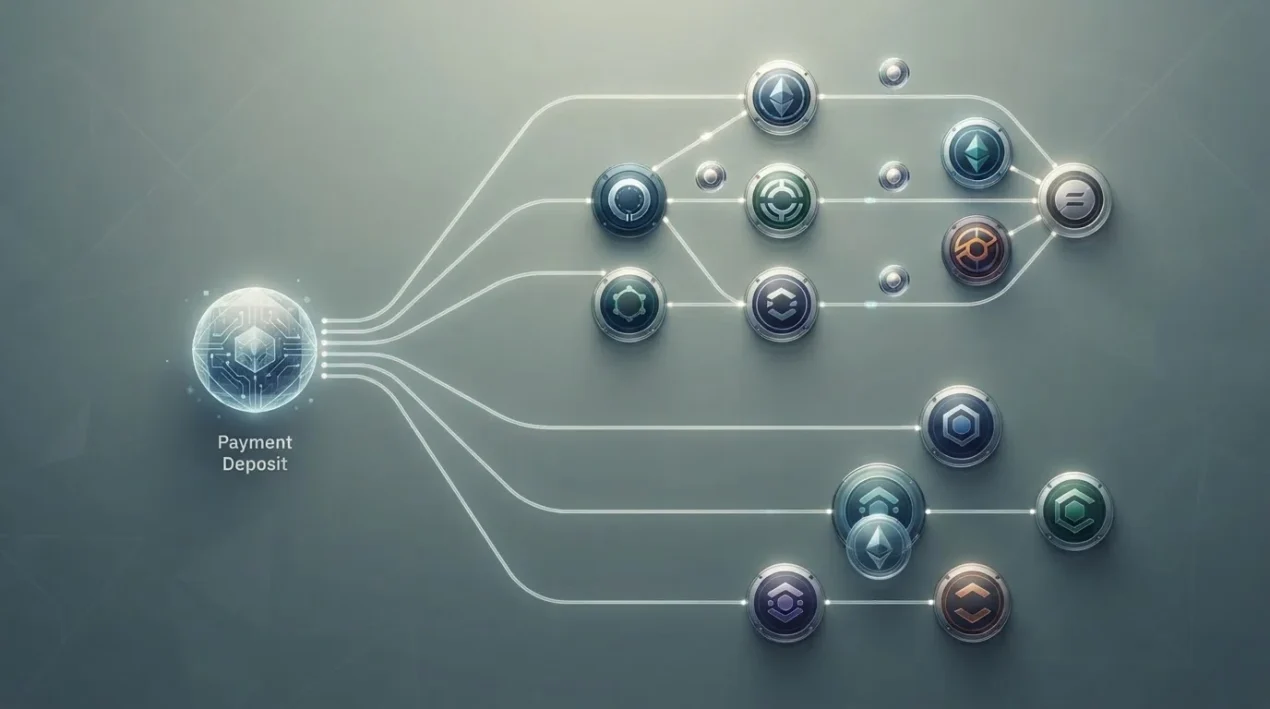
Content
BigClash uses a crypto-only cashier with 11 supported assets – USDT, USDC, SOL, ETH, BNB, TRX, GRAM, POL, BTC, LTC and TRUMP – across nine networks: ERC-20, BEP-20, TRC-20, Polygon, TON, Bitcoin, Solana, Litecoin and TRUMP. BigClash does not charge a deposit fee, and there is no maximum deposit limit. The asset name alone is not enough: USDT and USDC can appear on more than one network, and each network can have its own minimum deposit.
Australian payment law is a separate issue. The ACMA credit ban applies to online and telephone wagering services under Australia’s wagering framework. It does not describe BigClash’s crypto cashier or imply that BigClash is locally licensed. Network selection, deposit minimums and Australian regulation are separate questions.
BigClash payment structure at a glance
| Area | Detail | Why it matters |
|---|---|---|
| Assets | 11 crypto assets | Shows the number of supported asset labels in the payment set |
| Networks | 9 networks | Explains why an asset such as USDT can have more than one deposit route |
| Stablecoins | USDT and USDC appear across multiple networks | Network selection is as important as selecting the token itself |
| Fiat claims | Not included in the confirmed crypto payment set | PayID, cards and e-wallets are not included in the crypto method list below |
| Australian rule | Credit cards and digital currency are restricted for online and telephone wagering | This Australian wagering rule does not prove the BigClash cashier or local licensing status |
The 11 crypto assets
The supported asset set is USDT, USDC, SOL, ETH, BNB, TRX, GRAM, POL, BTC, LTC and TRUMP. That list mixes stablecoins, native blockchain assets and other tokens. The practical consequence is that readers should not treat all 11 as interchangeable payment rails.
USDT and USDC are the clearest examples. Their value label may look familiar, but the deposit route can differ depending on whether the cashier presents ERC-20, BEP-20, TRC-20, Polygon or another supported network. Sending the right token over the wrong chain can cause a failed or difficult-to-recover transfer. The safest process is to match the asset, network and destination address exactly as shown in the logged-in cashier.
Native assets such as BTC, SOL and LTC are easier to describe because the payment routes give them their own Bitcoin, Solana and Litecoin network routes. Even then, the destination address and minimum amount should be checked again before every transfer because wallet instructions can change.
Network-by-network minimum deposits
Minimums differ by asset and network combination. They remain in their stated crypto denominations rather than being converted into Australian dollars. Crypto prices and exchange rates move, so a fixed AUD equivalent would quickly become stale.
| Network | Asset | Minimum deposit |
|---|---|---|
| ERC-20 | USDT | 5 USDT |
| ERC-20 | USDC | 5 USDC |
| ERC-20 | ETH | 0.003 ETH |
| BEP-20 | USDT | 5 USDT |
| BEP-20 | USDC | 5 USDC |
| BEP-20 | BNB | 0.009 BNB |
| TRC-20 | USDT | 5 USDT |
| TRC-20 | TRX | 15 TRX |
| Polygon | USDT | 5 USDT |
| Polygon | USDC | 5 USDC |
| Polygon | POL | 66 POL |
| TON | USDT | 5 USDT |
| TON | GRAM | 3.8 GRAM |
| Bitcoin | BTC | 0.00008 BTC |
| Solana | SOL | 0.07 SOL |
| Litecoin | LTC | 0.12 LTC |
| TRUMP | TRUMP | 3.4 TRUMP |
The pattern is more useful than any single row. Stablecoins repeat because the same asset can be transferred over different chains, while native assets use their own routes. That is why a payment guide organised only by coin name is incomplete.
Why USDT and USDC require network attention
USDT appears in the payment set on ERC-20, BEP-20, TRC-20, Polygon and TON. USDC appears on ERC-20, BEP-20 and Polygon. A user therefore has to make two choices: token and network. Seeing “USDT” in both a wallet and casino cashier does not by itself establish that the transfer paths match.
A practical deposit workflow is to open the cashier first, choose the network, copy the displayed address, then configure the sending wallet to use that same chain. Do not reverse the process by sending from a convenient network and assuming BigClash will recognise it. If the cashier changes the route or address, the current cashier instruction should control the transaction.
This also explains why transaction costs cannot be summarised with one universal figure. Blockchain network fees can be external to the casino and can vary by chain and network conditions. No universal transfer-fee estimate applies because blockchain costs can vary independently of the casino deposit policy.
Native-network deposits are simpler, but still need verification
BTC, SOL and LTC each have a native route: Bitcoin, Solana and Litecoin. The minimums are 0.00008 BTC, 0.07 SOL and 0.12 LTC. These entries remove the stablecoin-style chain choice, but they do not remove the need to verify the destination address.
BNB, TRX, POL and GRAM appear as additional network-linked assets in the payment list, while TRUMP has its own network row. Their minimums differ materially in token units, so comparing the raw numbers across assets is not meaningful. Fifteen TRX and 0.009 BNB are denominated in different assets with different market values.
For Australian readers, that is another reason informal AUD conversions can mislead. A conversion made at one moment can be stale quickly. The exact token minimum is the stable reference in this payment set; the current AUD equivalent belongs to the user’s wallet or exchange at transaction time.
What is not included as a BigClash payment claim
Other BigClash pages or third-party reviews can show cards, e-wallets or region-specific banking options. Those methods are not part of the confirmed 11-asset crypto set.
That does not mean those methods can never appear on BigClash; payment availability can vary by country, currency, account and date. A reader who sees a different cashier after logging in should treat the live cashier as a separate current interface and should not assume that every public review describes the same country, currency or date.
BigClash does not charge a deposit fee, and there is no maximum deposit limit. Blockchain network fees are separate from casino deposit fees and can still vary by chain and network conditions.
Why a small test transfer can reduce network risk
Crypto transfers are generally harder to reverse than card or bank payments, so a network mismatch can be more serious than choosing the wrong label in a conventional checkout. When a wallet supports the same token on several chains, the deposit screen and the sending wallet should show the same network before the transaction is authorised. A copied address should also be checked after pasting, because clipboard errors and stale saved addresses can create avoidable problems.
For a new route, a user may prefer to begin with an amount that meets the displayed minimum but remains within their planned budget, then confirm that the deposit is credited before making another transfer. This is a practical risk-control step, not a guarantee about processing speed. Confirmation time depends on the network and the operator’s current deposit process, so deposit confirmation should not be treated as universally instant.
Australian wagering payment law does not describe the BigClash cashier
From 11 June 2024, Australia’s credit ban prevents online and telephone wagering operators from accepting credit cards, credit-linked funds and digital currency for bets. ACMA describes this rule as part of the wagering framework. It is a significant Australian consumer-protection rule, but its scope must be stated precisely.
The rule does not prove that BigClash accepts or rejects any particular method, and it does not prove Australian licensing. Local licence status is explained in BigClash licence and safety. The ACMA rule therefore explains why Australian regulated wagering and the BigClash crypto cashier should not be collapsed into one statement.
Readers can check ACMA’s current explanation on the official credit ban page. The regulatory fact is about online and telephone wagering services; it is not a substitute for inspecting the actual cashier presented by a specific operator.
Deposits and withdrawals should be evaluated separately
Deposits and withdrawals involve different operational details. Deposits concern funding routes, network selection and minimum deposit amounts, while withdrawals concern cash-out minimums, processing expectations, verification steps and method-specific restrictions. Treating them separately makes those differences easier to evaluate.
Funding routes, network selection and deposit minimums are separate from cash-out specifics. The BigClash withdrawals information covers cash-out mechanics. If identity verification becomes relevant before withdrawal, the BigClash KYC information explains that conditional process.
A safer crypto deposit workflow
- Complete account setup first. Use the BigClash registration guide if you need the account sequence.
- Open the current cashier. Do not rely on a saved address or an old image of the cashier.
- Select the asset. Confirm whether you are sending USDT, USDC, BTC, SOL or another supported token.
- Select the exact network. This is essential for stablecoins that appear across several chains.
- Check the displayed minimum. Compare it with the minimum table, but follow the live cashier if the interface has changed.
- Copy the destination address carefully. Verify the first and last characters after pasting into the sending wallet.
- Review the sending-wallet network fee. A blockchain fee is not the same thing as a casino deposit fee.
- Keep a transaction record. Save the transaction hash so you can trace a transfer if settlement is delayed.
What the network table tells you that a coin list cannot
The key distinction is between assets and rails. Eleven supported asset labels do not mean eleven simple one-to-one payment routes. USDT alone spans five networks, and USDC spans three. The nine-network structure explains why wallet compatibility must be checked before the transfer is sent.
That matters more than relying on contradictory fiat-method claims from third-party reviews. Network-aware checking can help prevent a real deposit mistake, while a generic banking list often says little about how a crypto transfer should actually be configured. For the broader product picture, return to the BigClash Australia review.
Bottom line
The BigClash payment set includes 11 crypto assets and nine networks. The key practical issue is network matching, especially for USDT and USDC, which appear on several chains. The minimum deposit table should be read by asset-network pair rather than by coin name alone, with amounts kept in their stated crypto denominations instead of fixed AUD conversions.
Australian wagering payment law is relevant context but not a description of this cashier. ACMA’s ban on credit cards and digital currency applies to online and telephone wagering under the Australian framework. It should not be used to imply BigClash local licensing or to overwrite the crypto cashier details. Use the deposit and network information for funding decisions, then move to the withdrawal guide when the task changes to cashing out.
This material was created by the BigClash Australia Guide team.
Related posts
BigClash KYC and Verification: When Checks Are Triggered
BigClash Withdrawals Australia: Minimums, Processing and What Is Verified