
BigClash Reviews and Complaints: How to Read Player Feedback
 Available in US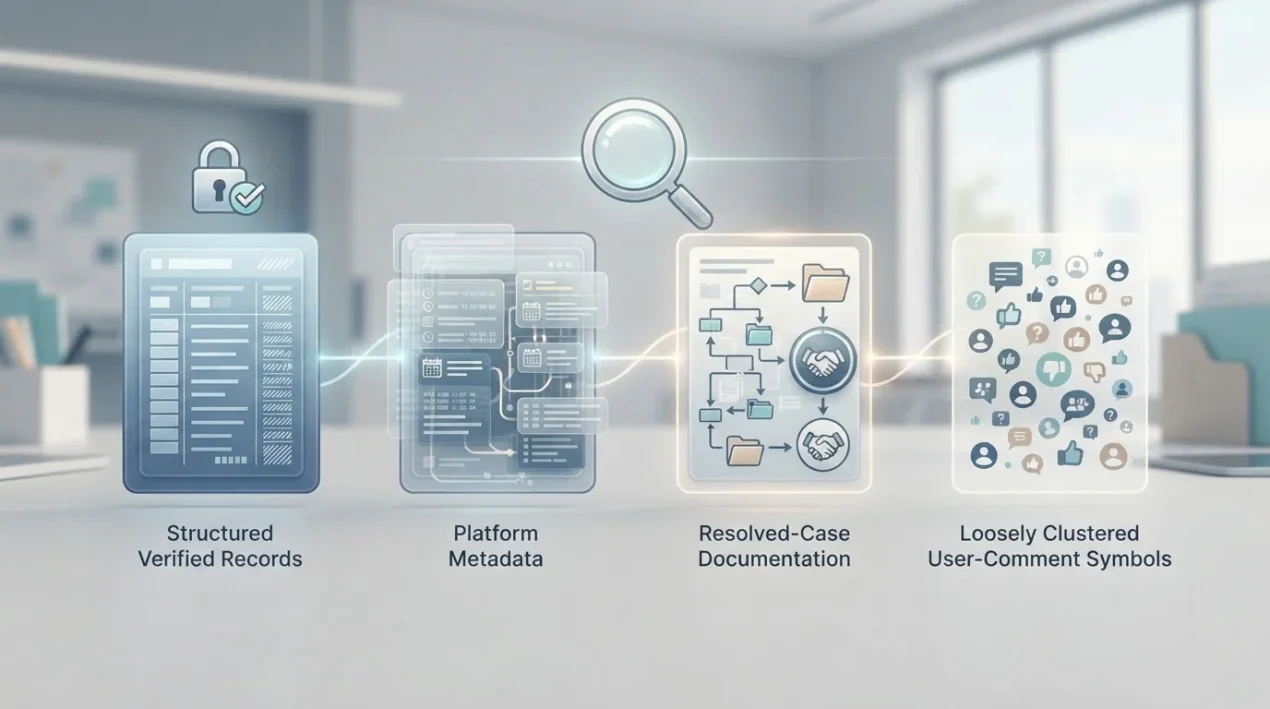
Content
Current review and complaint pages show clear interest in BigClash, with withdrawal delays and declined-withdrawal experiences appearing repeatedly in recent user narratives. That is useful sentiment evidence, but it is not proof that every allegation is true, representative or caused by the same issue. A review site records what users say; it does not automatically verify account history, payment logs or the operator’s internal decision-making.
The safest way to read BigClash complaints is to separate four evidence levels: verified operator or regulator facts, platform metadata, complaint cases with a documented resolution status, and unverified user narratives. BigClash’s 24/7 withdrawal-availability statement and Australian licence status belong to the factual layer. Sweeping accusations about non-payment or dishonest conduct remain allegations unless independently established.
A four-level method for reading BigClash reviews
| Evidence level | What it can tell you | What it cannot prove alone |
|---|---|---|
| Verified operator or regulator fact | Licence status, published rules or a specific term that has been checked | How every individual dispute ended |
| Platform metadata | Review volume, dates, complaint categories and visible status labels | Whether each user’s factual narrative is complete or accurate |
| Resolved complaint case | That a platform recorded a particular dispute as resolved | That all similar complaints will resolve the same way |
| User allegation | The experience and concern reported by one reviewer | Fraud, deliberate non-payment or a general rule about all accounts |
This hierarchy prevents two opposite errors. One is dismissing all complaints because they are user-generated. The other is treating every negative review as a verified finding about the operator. Useful review analysis sits between those extremes.
What current review pages are signalling
Recent Trustpilot material for BigClash includes complaints about pending withdrawals, cancelled or declined withdrawals, bonus expectations and customer-support experiences. AskGamblers complaint records also show BigClash cases centred on withdrawals, including cases that the platform marks as resolved as well as a current open case. Those pages demonstrate that withdrawal handling is a meaningful review topic for readers evaluating the brand.
They do not establish a universal conclusion about all BigClash withdrawals. The same public review set can contain negative narratives, positive payment experiences and complaints that later receive a resolved status. That mixture is exactly why individual posts should be treated as evidence of sentiment rather than a substitute for transaction records.
A fixed Trustpilot score would age quickly because ratings move as new reviews arrive, old reviews are moderated and platform calculations change. The useful signal is the presence and recency of complaint themes rather than one volatile number.
Withdrawal complaints: separate the theme from the fact
Withdrawal delay is the strongest recurring theme visible in current BigClash review material. Some users describe payments remaining pending beyond the time they expected. Others describe a withdrawal method being declined or funds returning to the account. AskGamblers complaint pages also show examples where a withdrawal-related dispute was later marked resolved by the platform.
Those narratives can justify a practical recommendation: do not judge the withdrawal experience only by how quickly deposits work, and keep records if a payout needs support follow-up. They do not justify asserting that BigClash intentionally withholds all withdrawals or that every pending payment reflects misconduct.
BigClash withdrawal information lists 24/7 withdrawal availability as an account feature. Availability describes when a withdrawal request can be made or accessed; it does not guarantee instant processing or settlement. Exact minimums, method-specific limits and processing details are available in BigClash withdrawals and should remain separate from review allegations.
Bonus complaints need the same discipline
Bonus reviews often involve a mismatch between what a player expected and what the promotion, wagering requirement or eligibility rule actually allowed. A reviewer can accurately describe being disappointed while still leaving important details unstated, such as whether the bonus was activated, whether a deposit qualified or whether a wagering condition applied.
For that reason, a complaint about a missing or cancelled promotion should be read alongside the current offer terms rather than treated as proof that the casino systematically refuses bonuses. The practical question is whether the account’s promotion terms match what was advertised to that user at the relevant time.
The wider BigClash payments is also useful when a bonus dispute is mixed with a deposit or withdrawal issue. Keeping the transaction path separate from promotional expectations makes it easier to identify what actually needs to be checked.
Support reviews are experience evidence, not service-level proof
Some public reviews describe support as repetitive, slow or unable to resolve a withdrawal immediately. That tells you that support quality is part of the current user conversation. It does not prove a fixed response time or demonstrate that every support interaction follows the same pattern.
Support experiences depend on the issue, the channel, the evidence available to the agent and whether another team has to review the account. A useful review therefore contains dates, the channel used, the question asked, the response received and what changed afterward. A one-line label such as “bad support” has much lower information value.
If you are reading a complaint thread, look for the operator’s response as well as the opening allegation. An operator reply is not automatically proof that the issue is resolved, but it adds context. A platform’s later “resolved” label adds another piece of evidence because it indicates how that specific complaint process ended within the platform’s system.
How to assess a complaint before relying on it
- Check the date. Payment methods, bonus terms and verification rules change. A complaint from a year ago can describe a process that no longer exists.
- Identify the exact issue. Pending withdrawal, declined method, bonus eligibility and account closure are different disputes and should not be merged into one theme.
- Look for evidence. Saved transaction images, transaction timestamps, support tickets and quoted terms are more informative than a conclusion without supporting detail.
- Read the operator response. It can reveal whether the dispute concerns verification, payment routing, account rules or a separate review process.
- Check the outcome. A complaint marked resolved should be read differently from one that is still open or unresolved.
- Compare with verified rules. If a user cites an exact withdrawal limit or processing time, compare it with the current terms rather than repeating it automatically.
No single review theme is enough to establish an overall verdict. A complaint can influence a decision when its date, evidence, operator response and resolution status are clear, while unresolved or unsupported allegations still need verification.
What the licence status contributes to review analysis
Review sentiment and licensing answer different questions. No Australian local licence for BigClash was verified in ACMA’s current licensed interactive wagering register. That is a regulatory fact. A negative Trustpilot post is a user account of an experience. Neither should be used to manufacture the other.
The licence distinction matters when a reviewer assumes that an offshore casino is covered by Australian wagering protections simply because the site is accessible. The BigClash licence and safety explains the Curaçao operator licence, the absence of a verified Australian local licence and the Australian online casino legal framework in detail.
For complaint reading, the practical takeaway is simple: confirm which regulator or dispute route actually applies before assuming that a reviewer’s desired escalation path is available. Jurisdiction is a factual layer, while complaint sentiment is a separate evidentiary layer.
Red flags in the review itself
A strong complaint does more than use strong language. It gives a timeline, identifies the transaction or rule involved, distinguishes what the operator said from what the reviewer inferred, and updates the thread when circumstances change. Weak reviews often make sweeping claims from one event, omit dates or present a conclusion as though it were documented fact.
- Be cautious with sweeping non-payment claims unless the statement is supported by a much broader evidence base than one account.
- Be cautious with claims of a hidden rule when the reviewer does not show which terms were in force at the time.
- Give more weight to complaints that include a clear chronology and a later resolution update.
- Check whether the complaint concerns a specific payment method rather than withdrawals generally.
- Separate a support complaint from the underlying transaction outcome.
- Do not assume a high or low star rating proves a regulatory fact.
What to record if you have your own dispute
If you encounter a payment or account issue, good records make the situation easier to understand and explain. Keep the withdrawal request time, amount, method, status changes, relevant terms visible at the time and support ticket references. Save images that show the transaction state while protecting passwords, full payment credentials and other sensitive information.
When contacting support, describe the issue narrowly and ask for the specific next step. If a withdrawal is pending, ask whether any account action is required and whether the payment is still under review. If a method is declined, ask whether the method is unavailable for the account or whether another verified route is required. Precise questions produce more useful records than repeated general requests for an immediate payout.
These steps do not guarantee a resolution, but they improve the quality of the evidence if you later need to compare the issue with terms or submit a complaint through an applicable channel.
Bottom line
BigClash reviews and complaint pages currently show substantial negative sentiment and repeated withdrawal-related concerns, alongside complaint cases with different outcomes. That is a legitimate decision signal, especially for readers who care about payout handling and support communication. It is not proof that every allegation is true or that the same result will occur on every account.
Use reviews as a structured evidence source: identify the date, issue, supporting material, operator response and final status. Then compare the claim with verified payment and regulatory facts. For exact withdrawal rules, go to the withdrawal guide. For the Australian regulatory position, use the licence facts page. For the broader product context, return to the BigClash Australia review.
This material was created by the BigClash Australia Guide team.
Related posts
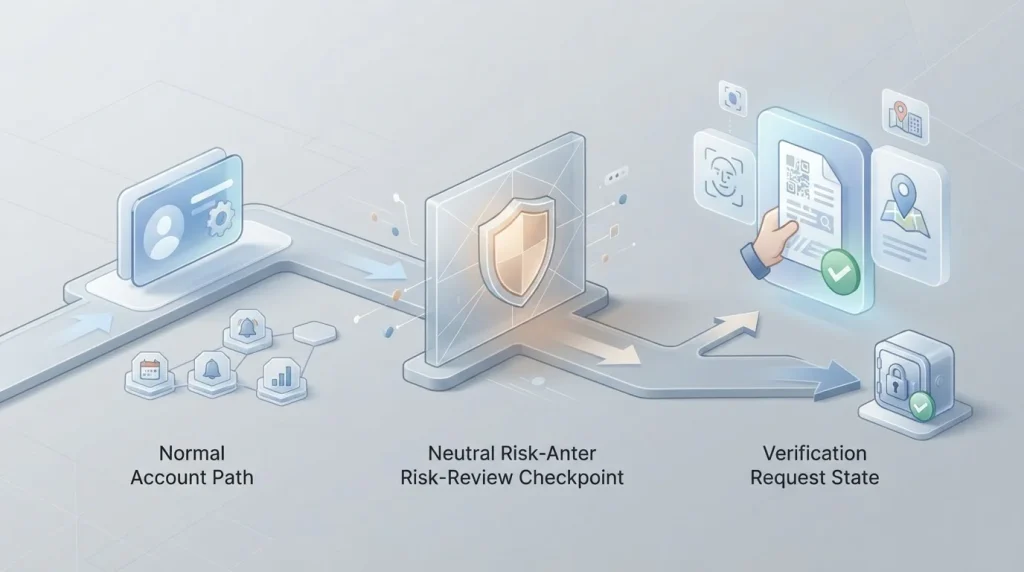
BigClash KYC and Verification: When Checks Are Triggered
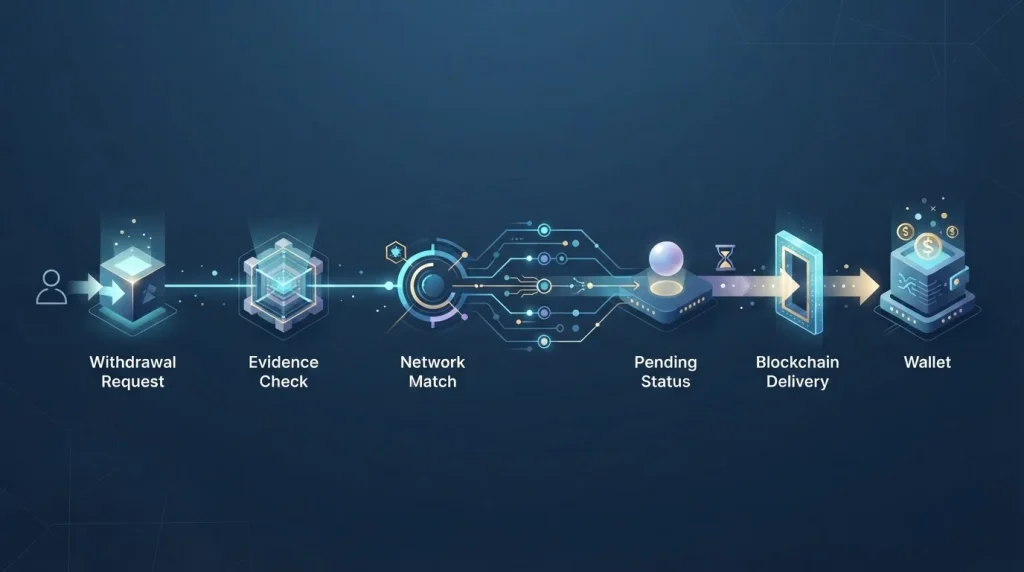
BigClash Withdrawals Australia: Minimums, Processing and What Is Verified